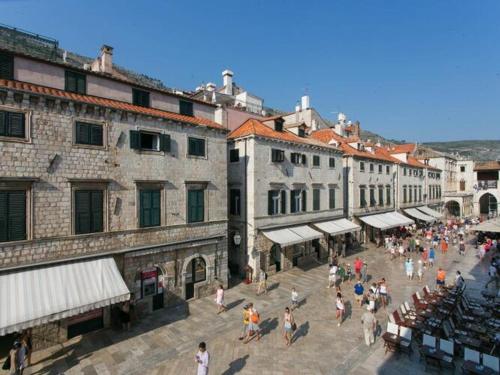
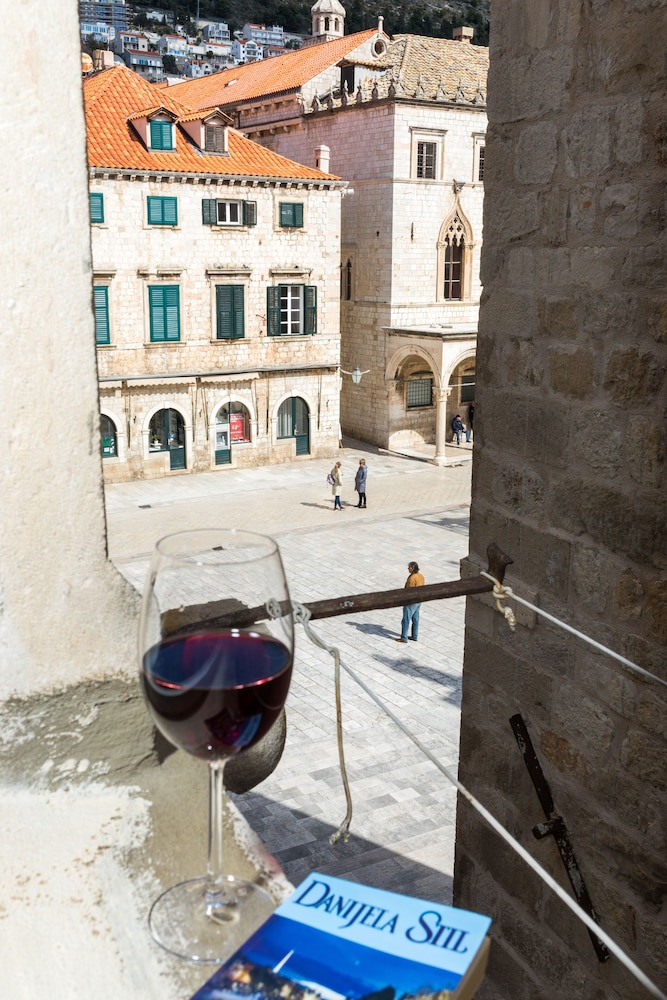
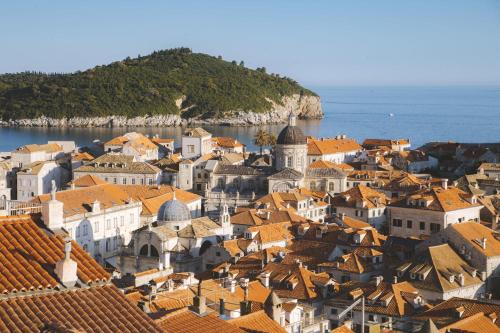
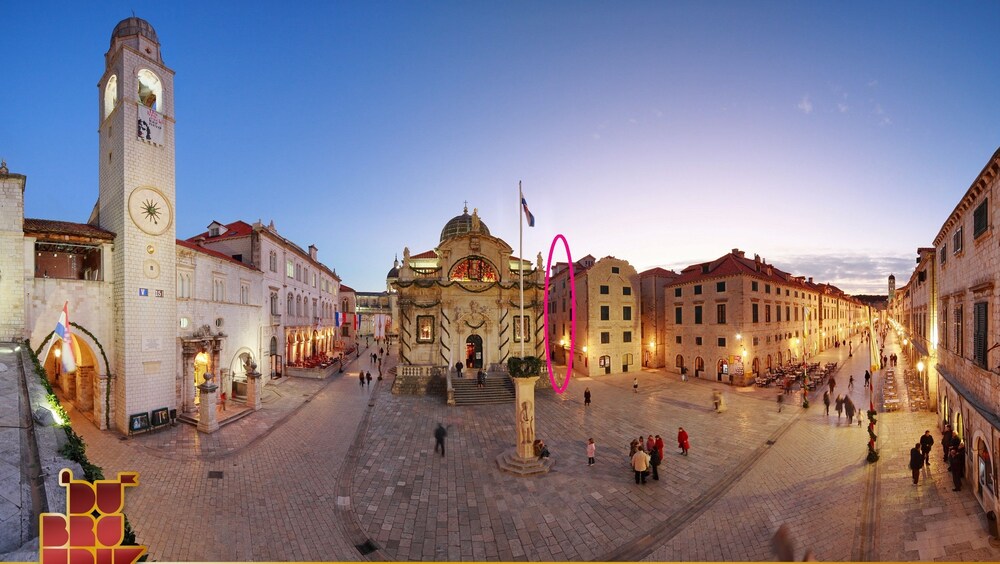
Sponza Palace closes the eastern end of Stradun on Luža Square, and it is the one major Old Town building that came through the great 1667 earthquake almost intact. Built between 1516 and 1522, it combined a customs house, a mint, an armoury, a bank and a school under one roof - the beating economic heart of the Ragusan Republic. The name comes from spongia, the Latin for the porous rock that once filtered rainwater collected here. Its Gothic-Renaissance facade, with a delicate arched loggia below and pointed windows above, is one of the most photographed corners of the whole city. The magic is the interior courtyard, which is free to enter and open to the sky. Cool stone arcades run round all four sides; in one corner a permanent exhibition remembers the young men who died defending Dubrovnik in the 1991-92 siege, with their photographs on the walls of a small chapel-like room. Thirty minutes covers the courtyard and memorial comfortably, and the palace is open every day, with hours shrinking to 10:00-15:00 in winter.